
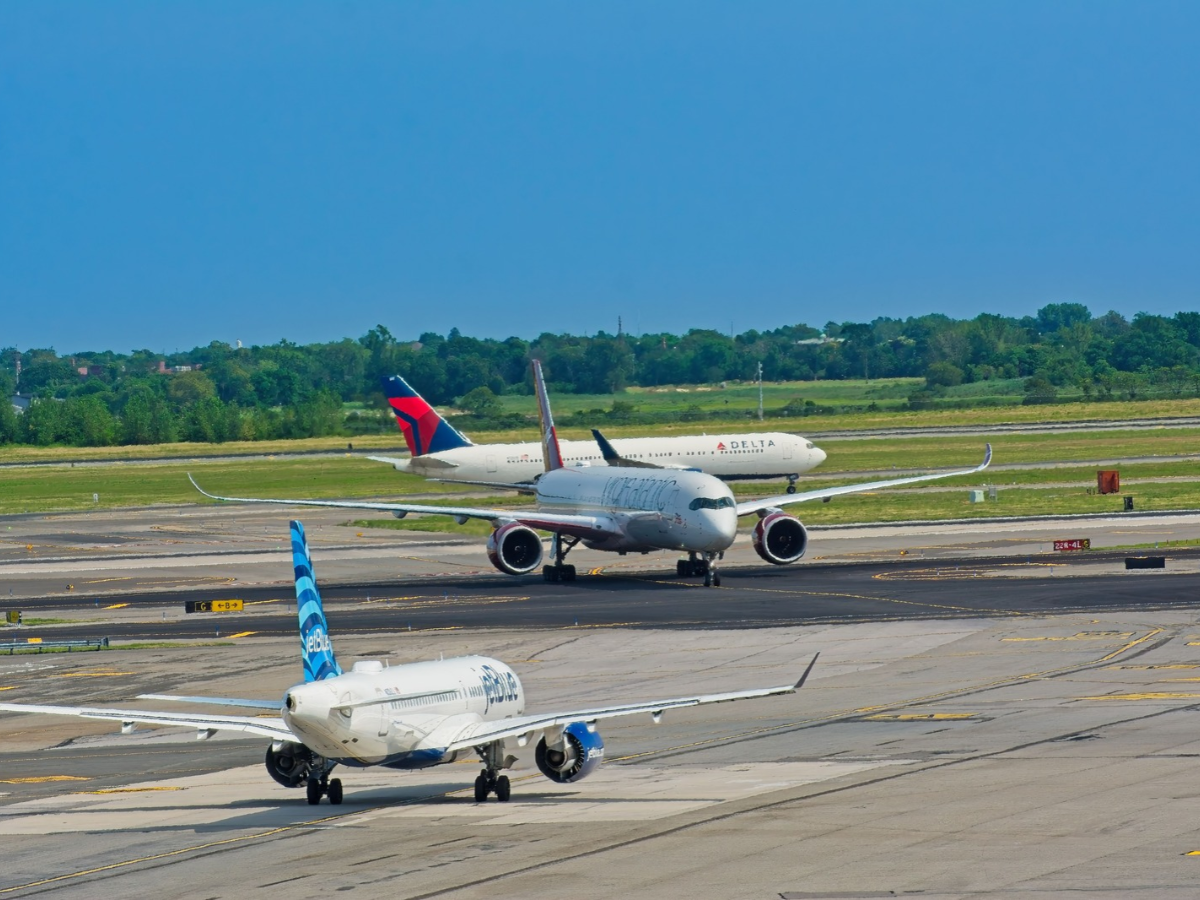
US air travel disruptions continued through the weekend after the Federal Aviation Administration (FAA) issued a nationwide ground stop on November 13, 2026, triggered by a telecommunications and router system failure.
According to a report in Reuters, more than 11,500 flights were affected on November 15, 2026, including 2,100 flights being canceled and 9,400 flights delayed. Approximately 3,500 flights were in the air when the FAA issued the ground stop.
A report in NBC News stated that Hartsfield–Jackson Atlanta International Airport, Dallas Fort Worth International Airport, and Chicago’s O’Hare International Airport were among the hardest-hit major travel hubs following the FAA stoppage.
U.S. Transportation Secretary Sean Duffy stated that air travel operations are “slowly returning to normal,” projecting that the system would be fully back to normal by the end of Sunday or Monday morning. The operations are expected to return largely to normal by November 16, 2026.
Continue reading for more details.
What happened after FAA lifted its ground stoppage?
After the Federal Aviation Administration (FAA) lifted its nationwide ground stop on Friday, November 13, 2026, at 8:15 p.m. ET, the airspace reopened, and some flights began operating again, but recovery was slow and disruptive for days.
U.S. Transportation Secretary Sean Duffy warned that the operations would take time to return to normalcy. He said that airlines could not immediately resume full schedules because many aircraft and crews were out of position after the multi-hour halt. He told CBS:
“What happens with a ground stop, like on Friday, we have airplanes and crews that are out of position, so it takes a little bit of time for the airlines to get back and choreographed and at full capacity and operations, but we’re well on our way.”
Duffy attributed the FAA stoppage to the outdated 1980s-era analog telecommunications switches and routers that became overloaded with data. This led to inconsistent radar and communications data across Terminal Radar Approach Control facilities (TRACONs) and air traffic control centers nationwide.
Speaking at a White House conference, Duffy said:
“We have old, old switches, old routers. We use 1980s little copper lines. What went down was old, right? It was the old legacy equipment. It failed. And listen, it’s going to continue to fail.”
Duffy urged Congress to provide $50 billion to update the air traffic control network rather than relying on old temporary switches. The hardware, telecommunications equipment, and control towers need to be replaced. According to a Fox Business report, Duffy said:
“This is an emergency. I want Congress to give us emergency funding,” Duffy said. “This is bipartisan. This is American. I want $50 billion.”
Duffy further emphasized that the new equipment installed under the Trump administration has not experienced failures. He denied that the outage was a cyberattack or related to the FAA’s rollout of the new SMART AI system.
President Donald Trump urged Congress on Sunday to approve more funding in order to modernize the air-traffic control system following a rare FAA ground stop. The ground stop began at 3:36 p.m. ET on November 13, 2026, and was lifted around 8:20 p.m. on the same day. As a result of the abrupt ground stop, tens of thousands of travelers remained stranded at airports and on planes.
Error: No feed found.
Please go to the Instagram Feed settings page to create a feed.
Error: No feed found.
Please go to the Instagram Feed settings page to create a feed.
Error: No feed found.
Please go to the Instagram Feed settings page to create a feed.