
The image of deserts in people’s minds is usually one of dry landscapes, extreme temperatures and limited vegetation. However, some of the driest places on Earth can occasionally transform into colorful fields of wildflowers after unusual rainfall, showcasing nature’s complex beauty.
Some of these rare events are known as superblooms; they occur when dormant seeds receive enough moisture to germinate. Depending on weather conditions and rainfall, flowers can cover a large section of the desert for several weeks.
Here below are three desert destinations where travelers can witness these spectacular natural events:
#3. Atacama desert
Located in Chile, the Atacama Desert is indeed one of the driest places on the globe. However, it experiences a rare occurrence known as “Desierto Florido,” or “Flowering Desert.” In 2026, the strangely heavy rainfall triggered the region’s largest floral display in nearly 30 years. More than 200 plant species bloomed, covering the desert in shades of pink, purple, yellow and white, according to NPR.
The flowering event occurs every few years, depending on the rainfall in the area. Travelers can explore areas near Huasco and Llanos de Challe National Park, where rare native flowers bloom after years of dormancy.
#2. Anza-Borrego Desert
Located in Southern California, United States of America, Anza-Borrego Desert State Park is world-famous for its rare, occasional wildflower superblooms. Following winter rainfall, the desert can be covered with colorful flowers, including desert sunflowers, sand verbena and desert lilies.
The flowering season generally runs from February through April; peak conditions vary each year depending on the weather. Before planning a visit, visitors can check the official site to plan the perfect vacation.
#1. Namaqualand
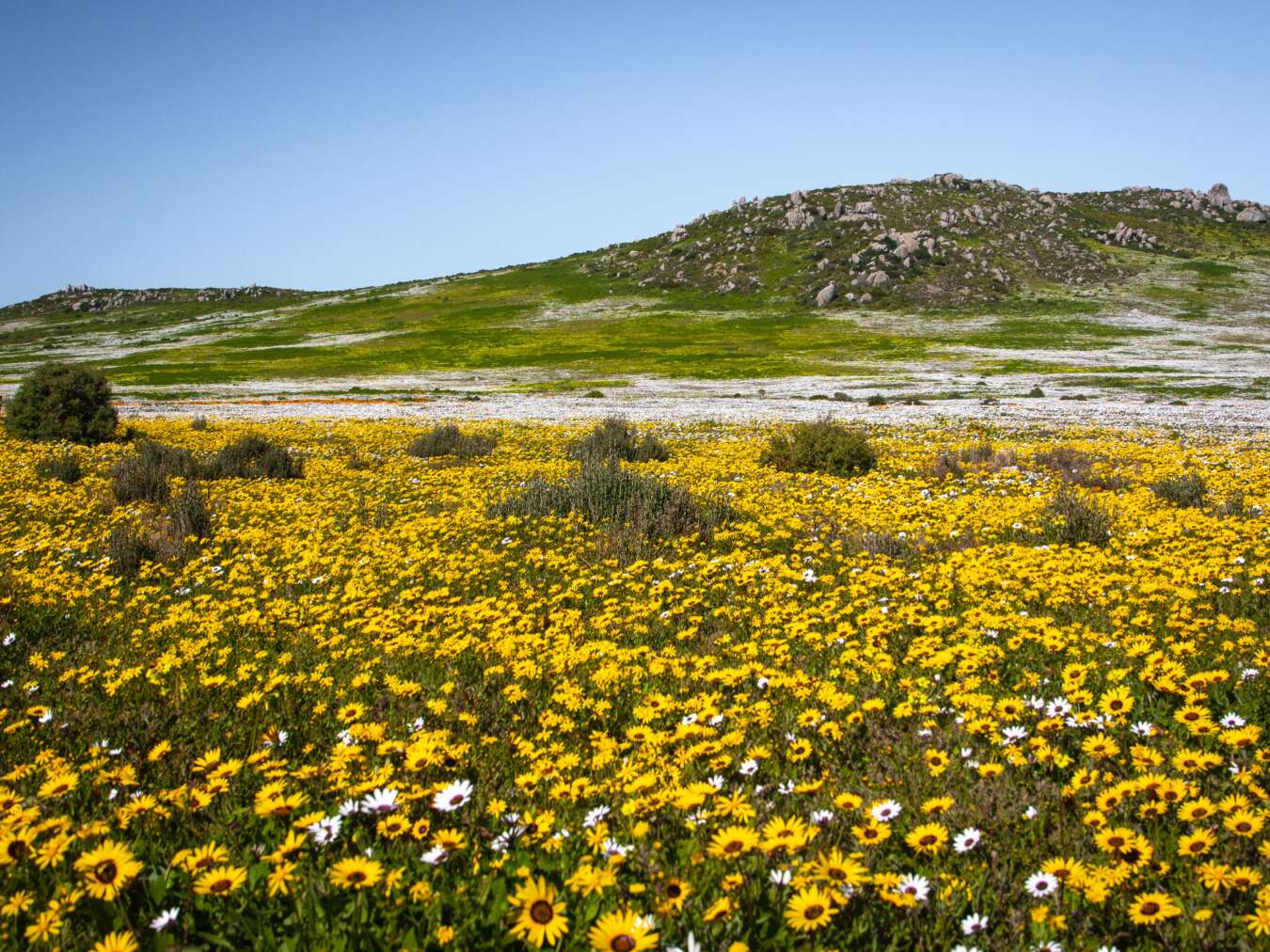
Situated in South Africa’s Northern Cape, Namaqua National Park is another great place to see desert wildflowers.
The national park transforms into a colorful flower field following winter rainfall. According to the South African National Parks, the region contains nearly 3,500 plant species, including more than 1,000 found nowhere else on Earth. Unlike the unpredictable Atacama superblooms, Namaqualand Park has a more regular flowering season, generally spanning August to September. However, rainfall varies.
For all three destinations, visitors should check flowering reports before making any booking.
Which destination amongst these three would you choose? Cast your vote in the comment section below.
Error: No feed found.
Please go to the Instagram Feed settings page to create a feed.
Error: No feed found.
Please go to the Instagram Feed settings page to create a feed.
Error: No feed found.
Please go to the Instagram Feed settings page to create a feed.