
If you are a history enthusiast who loves to travel to historic parts of the world, Rome’s Vatican Museums offer visitors a chance to explore the city’s centuries of rich history through their remarkable collections, historic paintings, buildings and monuments.
Situated within Vatican City, the museum houses thousands of artworks, including Renaissance masterpieces. According to Tripadvisor, three art galleries stand out among its many remarkable attractions for their collections and historic beauty. For those planning a visit to Rome, exploring these three galleries offers a great chance to discover some of Europe’s most celebrated treasures.
#1. Pinacoteca (Vatican Picture Gallery)
One of the most important stops for art enthusiasts visiting the Vatican Museums is the Pinacoteca. It opened on October 27, 1932, and occupies a building designed by the famous architect Luca Beltrami.
The historic collection features nearly 460 paintings in 18 rooms, arranged chronologically and by artistic school. Travelers can appreciate works by world-famous artists such as Leonardo da Vinci, Raphael, Titian and Giotto. The collection spans multiple centuries of Italian painting, giving visitors a chance to explore the development of European art.
#2. Gallery of Tapestries
The Gallery of Tapestries is one of a kind, offering a different historical experience through its impressive collection of woven artworks. It is part of the Vatican’s historic papal collections, which include works produced in Flemish workshops. Some pieces have designs based on drawings by Raphael and his students.
Visitors can admire the religious scenes and detailed textile beauty while exploring the gallery’s interior. Altogether, these three galleries provide visitors with a closer look at the heritage preserved inside the museum.
#3. Gallery of Geographical Maps
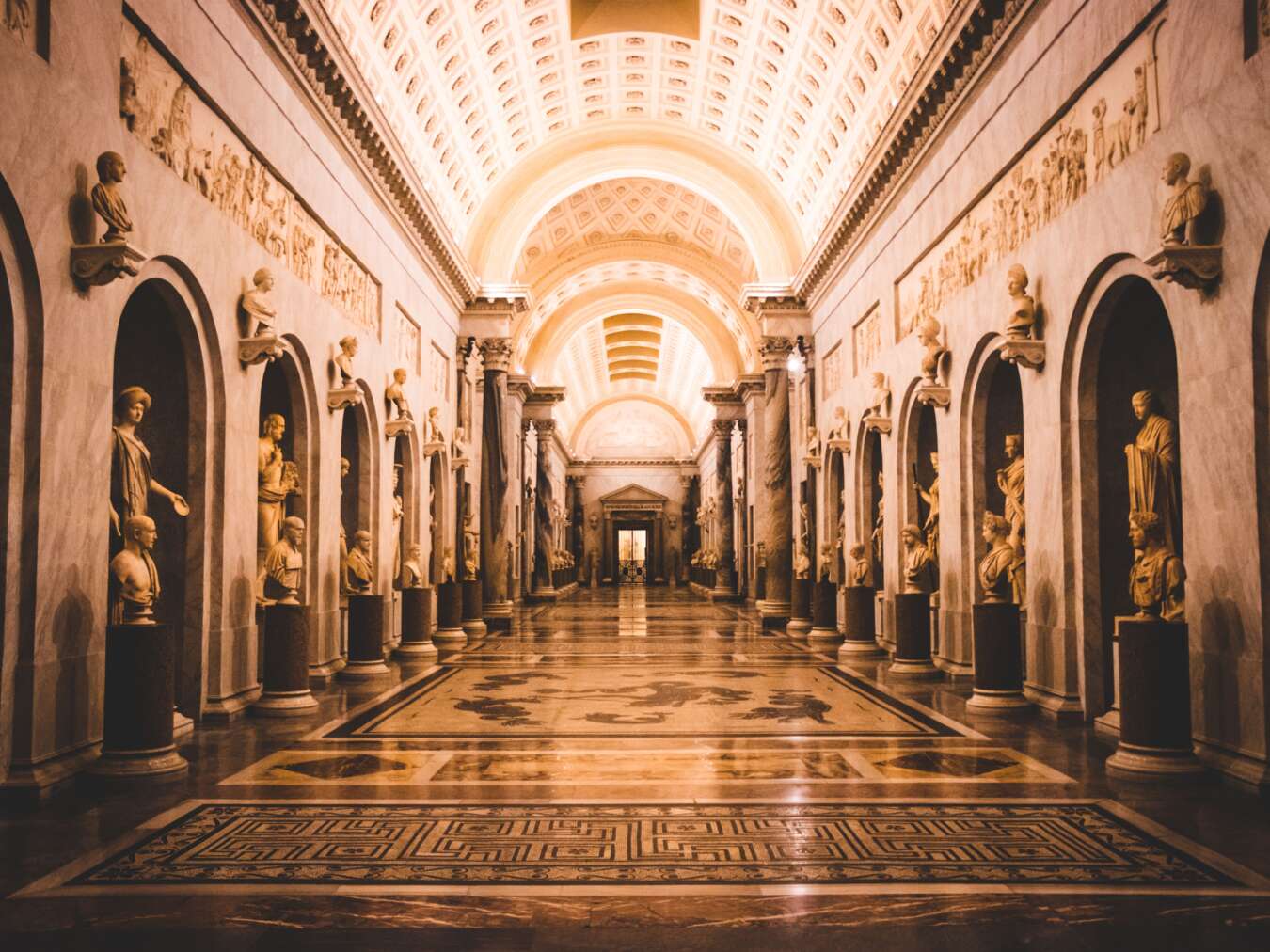
The Gallery of Geographical Maps is one of the most visually impressive spaces inside the Vatican Museums. It spans over 120 meters. The historic corridor has detailed maps depicting different parts of Italy.
Created between 1580 and 1583 under Pope Gregory XIII, the gallery was decorated under the direction of Cesare Nebbia and Girolamo Muziano, with the guidance of Ignazio Danti. The walls feature dozens of embedded maps, while the ceiling features religious artworks throughout.
Error: No feed found.
Please go to the Instagram Feed settings page to create a feed.
Error: No feed found.
Please go to the Instagram Feed settings page to create a feed.
Error: No feed found.
Please go to the Instagram Feed settings page to create a feed.