
Throughout history, civilizations and their ancient cities have been lost to time. However, many such cities have since been discovered. It is even possible to explore these cities and walk among these centers of ancient civilization.
Today, we’ll take a look at seven such beautiful cities that have been brought back to light.
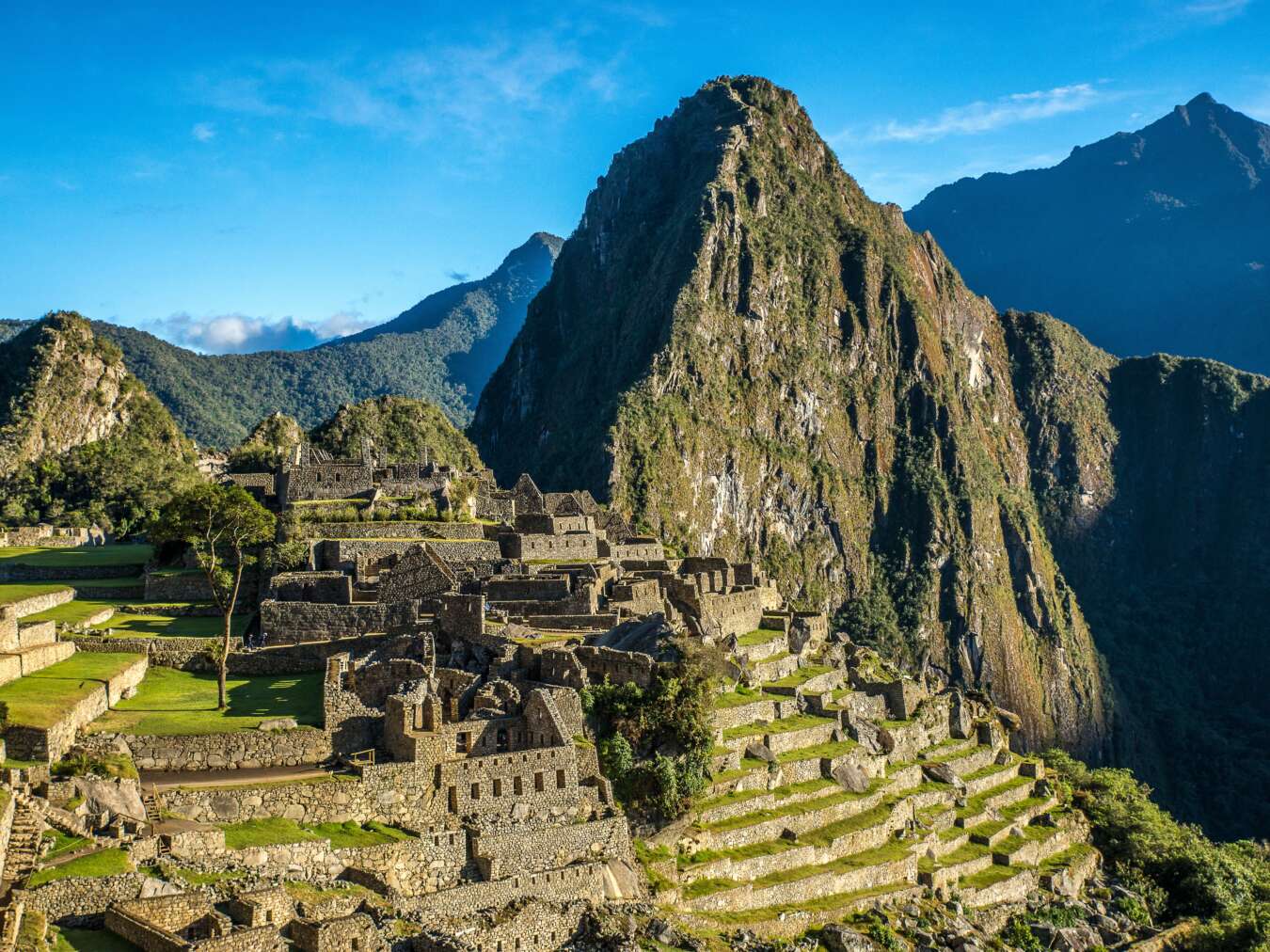
Machu Picchu, Peru, is one of the most famous ancient cities of the Incas
The Incan citadel, located in the heights of the Andes Mountains, was lost to time for a long period of history. It came to be rediscovered in the early 1900s. Although the locals were aware of it, the outside world had forgotten it.
It’s believed the citadel was constructed in the 15th century and is one of the last remaining showcases of the architecture of the Incas. It has been designated a UNESCO World Heritage site and can be toured.
Dholavira, the Indus Valley civilization, India
The rediscovery of Dholavira helped uncover more about the Indus Valley Civilization. It was one of the most notable cities at its height. Excavations in the past two decades have helped reveal much about the city and uncover the secrets of planning, trade, and water management.
Dholavira has also been designated as a UNESCO World Heritage site and is located in the Great Rann of Kutch, Gujarat. There are tours organized to explore ancient cities, and similar arrangements are in place for Dholavira.
One of the most famous ancient cities of mythology, Troy, Turkey
Known for its place in Homer’s epics of the Iliad and the Odyssey, Troy has a separate place in mythology. In fact, for the longest time, it was expected that it was a mythological city. However, rediscovered by German archaeologist Heinrich Schliemann in the 1870s, it turns out the city is very real.
The city can be explored and has multiple layers of settlements dating back to the Bronze Age.
Angkor Wat, Cambodia
While Angkor Wat may have been well known for years, researchers and archaeologists recently discovered that there was a vast network of roads, temples, and settlements that had been built up around it. All of these roads, temples, and settlements were lost to history until they were rediscovered.
The site is evidence of the architectural and engineering skills of the Khmer people and a very important cultural landmark that is open to viewing and exploring for travelers.
Thonis-Heracleion, Egypt
While archaeologists have discovered many ancient cities, the remains of Thonis-Heracleion stunned researchers in Egypt.
The city was a major port for the civilization, but was submerged for many years. Shipwrecks and ancient inscriptions found show that it was a very important trade port during the late Egyptian period. Given that it is submerged, exploring it in person is difficult, but Egypt has recreated the city through interactive maps that can be explored. Virtual explorations of the city are also possible through digital recreations.
Pompeii, Italy, is one of the most well-known tragedies
Pompeii was settled back in the 7th century BC by Oscans. It grew prosperous once it was incorporated into Rome. Unfortunately, the city was hit with an earthquake in 62 – 63 CE. Much rebuilding needed to take place. However, only 16 years later, in 79 CE, there was a catastrophic eruption of Mount Vesuvius.
Ash and pumice rained down, burying the city under 20 feet of debris. The next morning, superhot clouds of gas and ash swept the streets at 250 degrees centigrade, killing anyone who had survived and not fled.
It was rediscovered in 1599 and excavated in 1748, showing body-shaped voids in the hardened ash, and bread still in ovens, showing how sudden the catastrophe was.
Today, it is possible to walk through the Stabian and Forum Baths, the Teatro Grande and Teatro Piccolo. It is possible to explore the streets of one of the greatest ancient cities. It is also possible to explore the Pompeii Amphitheater, which is known to be the oldest stone Roman amphitheater in the world.
Petra, Jordan
Known as the Rose City, it was discovered by Johann Ludwig Burckhardt, a Swiss explorer, in 1812. The city is carved into the sides of red sandstone cliffs and was one of the most important ancient cities and a major trading hub in the 4th century BCE.
It can be explored today, and visitors can see the iconic Treasury and Monastery.
The water management and other systems in place also highlight the genius of the Nabataeans who inhabited the city. It is a UNESCO World Heritage Site.
Error: No feed found.
Please go to the Instagram Feed settings page to create a feed.
Error: No feed found.
Please go to the Instagram Feed settings page to create a feed.
Error: No feed found.
Please go to the Instagram Feed settings page to create a feed.