
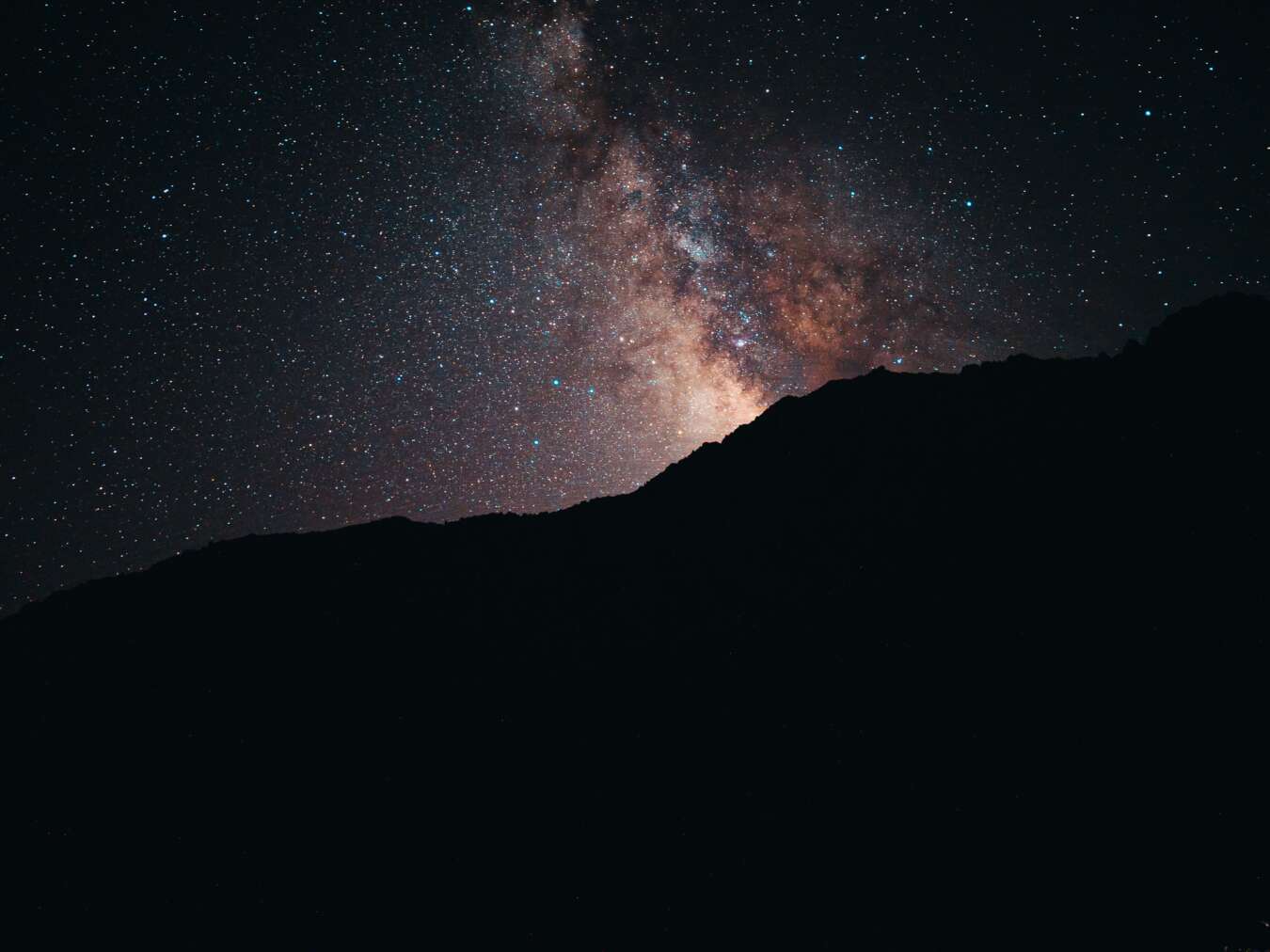
Head out of the busy cities of Southeast Asia to truly appreciate the night skies. With clean skies and high altitudes across volcanic mountains, isolated islands, and conserved forests, the night skies in these regions are perfect for stargazing.
Below are 7 stargazing spots to add to your bucket list to feel as though you’re reaching out and touching the stars.
1. Doi Samer Dao – Nan Province, Thailand
The poetic name of this site translates directly to “The Mountain at the Same Level as the Stars,” according to NanProvince.com.
Located in Si Nan National Park in Thailand, the horizon here blends seamlessly with the night sky. In this valley, with no light pollution from nearby cities, the Milky Way will be very visible from sunset through to sunrise. As you wake from your camping trip, you will be met with an awe-inspiring view of a sea of mist below.
Best time to visit: November to February. The winter months offer clear skies and low humidity.
2. King Kong Hill (Bukit Kedaluh) – East Java, Indonesia
This site is located at a high altitude of 2600m (about 8,530 feet) in the Bromo Tengger Semeru National Park in Indonesia.
As it is extremely dark in the hours leading up to sunrise, the constellations in the sky and shooting stars are very clear to see above the smoldering volcanoes of Mount Bromo and Mount Semeru.
Due to the high altitude, the air is very thin, and as a result, the stars appear very bright.
Best time to visit: May to September, during the dry season in East Java, and ideally around a new moon.
3. Carabao Island Observatory – San Jose, Romblon, Philippines
Just north of Boracay’s lively beaches—about 5 km across the Hambil Channel—lies the peaceful island of Carabao. Because it has very little light pollution, the night sky is remarkably clear.
Home to one of—if not the—largest privately owned telescopes in the Philippines, the Carabao Island Observatory pairs zero-glare island skies with guided deep-sky viewing, which allows visitors to spot distant nebulae, star clusters, and Saturn’s rings in stunning detail.
Best time to visit: December to May. Dry northeast winds keep coastal skies clear and calm.
4. The Tip of Borneo (Tanjung Simpang Mengayau) – Kudat, Sabah, Malaysia
Located at the northern tip of Borneo, this site offers dramatic scenery at the meeting point of the South China Sea and the Sulu Sea.
With very little artificial light, you can enjoy a 270-degree view of the horizon. The stars will be reflected in the black water below. This is an easy place to capture photographs of the galactic centre.
Best time to visit: March to September, offering the driest weather and highest Milky Way visibility.
5. Doi Mon Chong – Chiang Mai, Thailand
Tucked deep in the Omkoi District, Doi Mon Chong is well known for its beautiful savannah-like landscape with rolling golden grasslands. It can be reached by trekking, followed by a 4×4 drive.
As a result, there is very little traffic and no light pollution. This means that the night sky is very clear.
The high altitude of nearly 1900m means that even faint constellations can be seen with the naked eye.
Best time to visit: November to February, when the park opens for the cool trekking season, and skies stay cloudless.
6. Sablayan Parola Park – Occidental Mindoro, Philippines
Situated on a raised outcrop above the Mindoro Strait, this park offers a beautiful view of the western horizon. As the park is located far away from large cities, the open landscapes allow for uninterrupted stargazing.
Along with the sound of waves crashing, the cool sea air creates a serene environment.
Best time to visit: January to April for dry evenings, minimal cloud cover, and comfortable overnight temperatures.
7. Khao Yai National Park – Nakhon Ratchasima, Thailand
Even without much of an adventure, Khao Yai National Park is a great spot for dark skies. The park has been recognised for protecting dark skies and has very strict guidelines for lighting in its forest campsites such as Lam Ta Khong.
Just a few hours from Bangkok, you can pitch your tent in clearings in the lush jungle and see meteor showers in the sky.
Best time to visit: November to February for dry weather, or during major meteor showers like the Geminids in December.
Error: No feed found.
Please go to the Instagram Feed settings page to create a feed.
Error: No feed found.
Please go to the Instagram Feed settings page to create a feed.
Error: No feed found.
Please go to the Instagram Feed settings page to create a feed.