
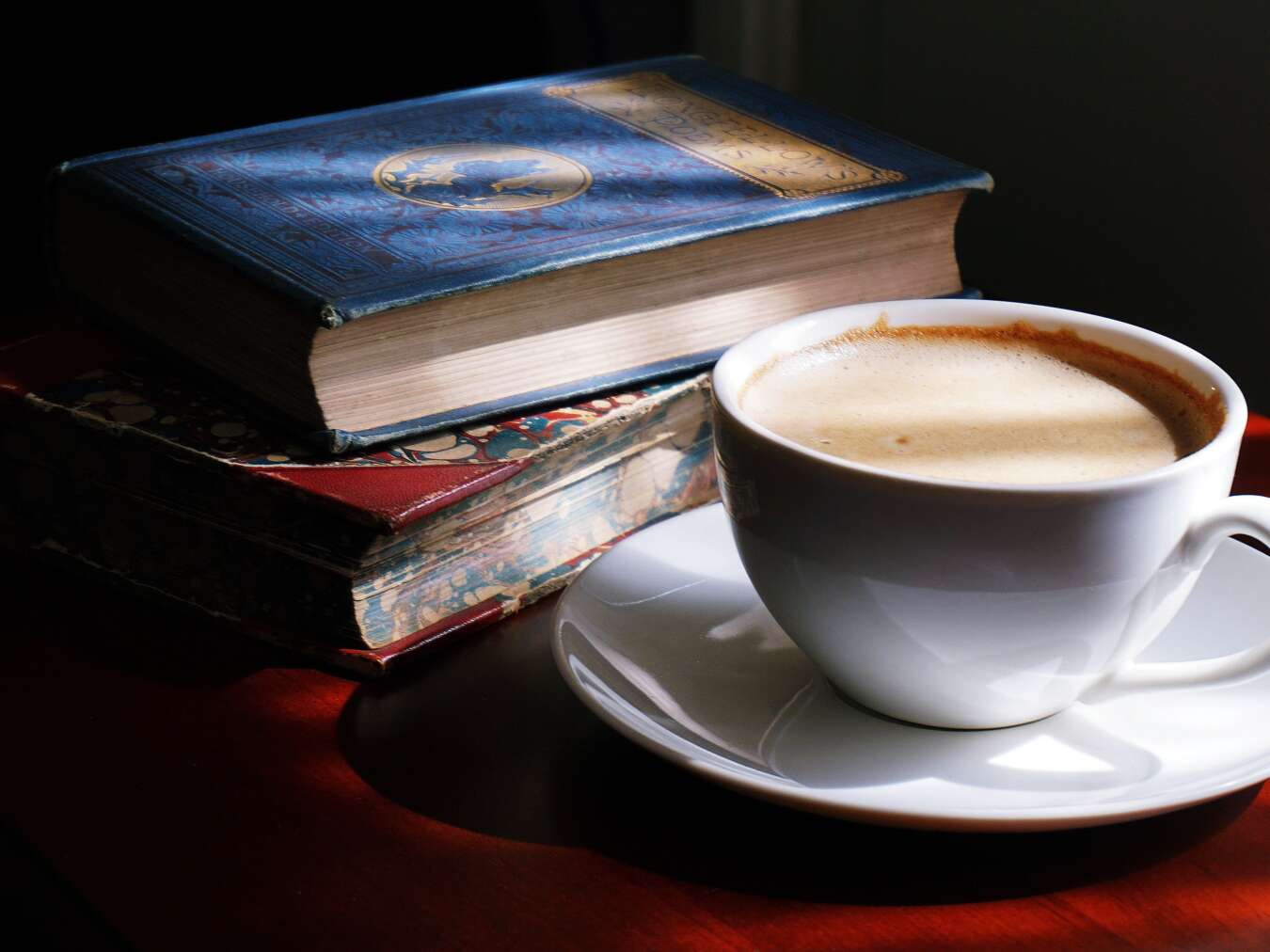
Cafés have been central to public life in communities. Poets, philosophers, and patriots all met in coffeehouses to write manifestos, discuss human rights, and plan to overthrow empires. Seven famous and historic cafés across the world have been central to the development of new art, literature, and political change.
From Enlightenment salons to Cold War resistance, these seven cafés prove that a simple table and a cup of coffee can change the world.
1. Café Procope – Paris, France
Opened in 1686, the Café Procope was an important hub of the French Enlightenment.
Philosophers including Voltaire, Jean-Jacques Rousseau, and Denis Diderot came together in this café to create the Encyclopédie.
Years later, this café saw many influential figures of the French Revolution, including Maximilien Robespierre and Georges Danton, and also American Founding Father Benjamin Franklin.
2. Café Central – Vienna, Austria
At the start of the 20th Century, Café Central was a meeting place for many influential intellectuals.
Psychoanalyst Sigmund Freud, writer Stefan Zweig, and poet Peter Altenberg rubbed shoulders with exiled Russian revolutionaries Vladimir Lenin and Leon Trotsky.
In 1917, when an Austrian official was told that a revolution was occurring in Russia, he replied:
“Who would make a revolution? Perhaps Herr Bronstein [Trotsky] from the Café Central?”
3. Cabaret Voltaire – Zurich, Switzerland
This artistic club was opened in Zurich in 1916 by German poet Hugo Ball and performer Emmy Hennings.
Alongside Tristan Tzara and Jean Arp, they used absurdism, poetry, and collage in protest of the First World War.
This created Dadaism, a radical anti-art movement that forever changed modern aesthetics.
4. Caffè Pedrocchi – Padua, Italy
Often referred to as the “café without doors” because it was open 24/7, this neoclassical café was frequented by Romantic writers, including Lord Byron and Stendhal.
In February 1848, the café became central to the Italian Risorgimento. When Austrian soldiers opened fire on protesters in the café, a large uprising occurred to push for Italian unification.
5. Café de Flore – Paris, France
In the middle of the 20th Century, this café became the de facto office of philosophers Jean-Paul Sartre and Simone de Beauvoir.
Surrounded by artists like Pablo Picasso and writers of the Lost Generation, Sartre and Beauvoir wrote, debated, and defined post-war European thought from its iconic red leather booths.
6. Café Slavia – Prague, Czech Republic
Café Slavia was a popular place for avant-garde poets and composers in the Czech Republic, including Bedřich Smetana.
During the Cold War, the café became an important place for anti-communist activists.
Playwright Václav Havel met with others in this café as an activist, and later became leader of the 1989 Velvet Revolution and president of the country.
7. Café Riche – Cairo, Egypt
Since opening in 1908, this café has been central to cultural and political change in Egypt.
Egyptian Nobel Prize winner Naguib Mahfouz held weekly literary meetings here.
During the 1919 Revolution, anti-colonial leaflets were printed in the basement of the café. In 1952, revolutionaries planned to overthrow the monarchy in this café.
Also Read:
5 European cities with the best café culture (that aren’t Paris or Vienna)
Forget holidays: 7 bizarre festivals worldwide dedicated to strange objects
Error: No feed found.
Please go to the Instagram Feed settings page to create a feed.
Error: No feed found.
Please go to the Instagram Feed settings page to create a feed.
Error: No feed found.
Please go to the Instagram Feed settings page to create a feed.