

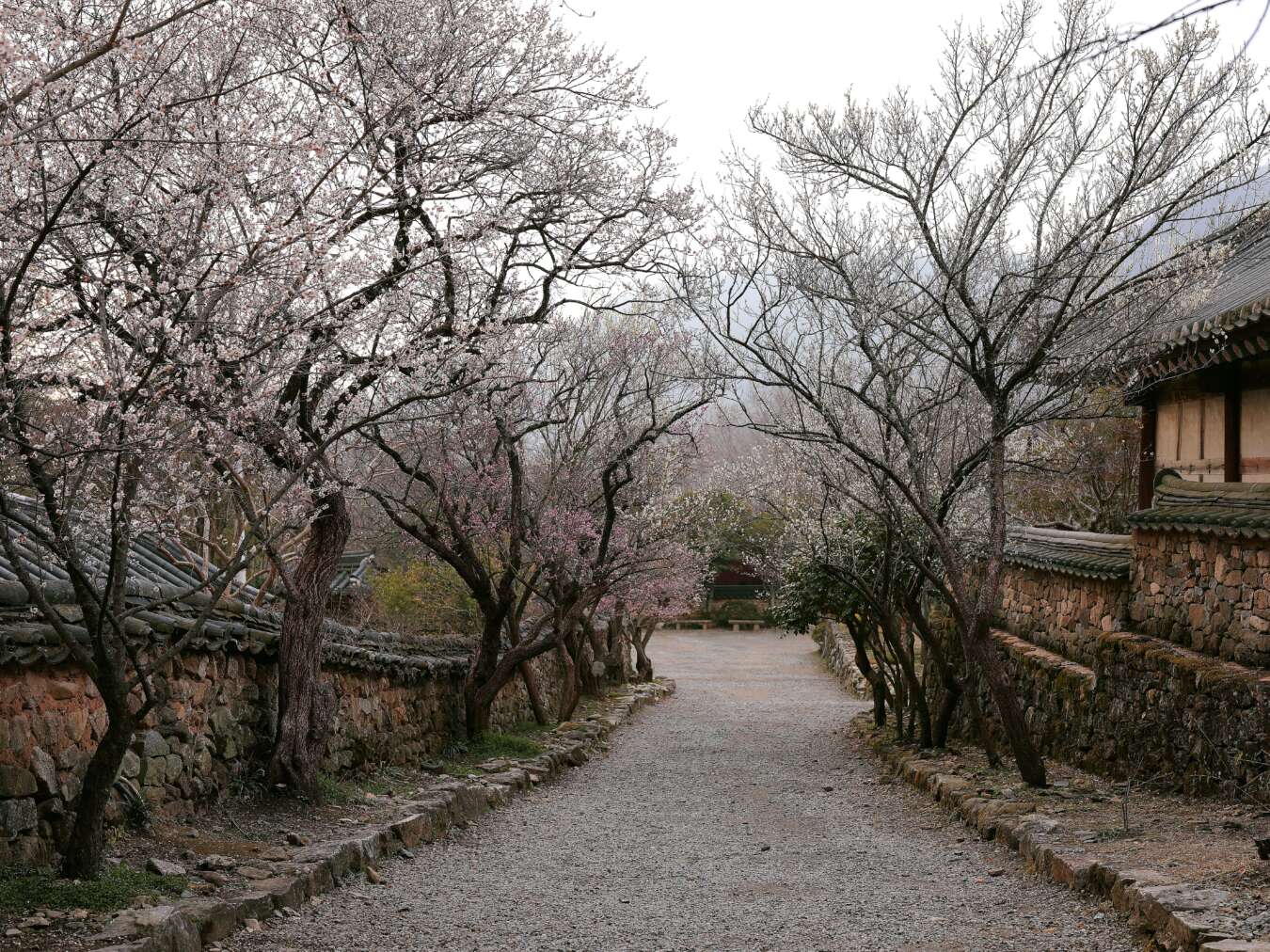
While Seoul and Busan capture most of the spotlight on a standard itinerary, South Korea’s authentic heritage is often found in historic towns, or the more tranquil, out-of-the-way destinations.
Venturing away from metropolitan areas allows people to experience Joseon-style villages, historic forts, and local specialities—all very different from urban environments.
Here are three overlooked historic towns worth adding to your route.
1. Andong: The Spiritual Heart of Confucian Korea
Situated in North Gyeongsang Province, Andong is commonly recognized as the centre of Korean Confucianism. Its most renowned attraction is Hahoe Folk Village, a UNESCO site comprising stilted houses and mansions belonging to noble families, all encircled by the dramatic, sinuous banks of the Nakdong River.
Unlike many tourist villages which are re-enactments, Hahoe continues to be an inhabited area and is home to the Ryu family’s lineage. Guests can stroll through Andong’s peaceful earthen pathways, view Hahoe mask dance performances, and tour Dosan Seowon, a 16th-century Confucian school housed in pine woods and boasting views of the river.
Before leaving, try Andong jjimdak, a savory braised chicken dish simmered with glass noodles, vegetables, and soy sauce that originated in the city’s old market.
2. Suncheon: Walled Villages and Coastal Heritage
Although Suncheon in South Jeolla Province is famed for its environmentally-friendly marshland, there are also fascinating historical attractions to discover here.
Naganeupseong Folk Village provides a rare insight into a perfectly preserved Joseon-period fortified village. Surrounded by solid stone walls, the village is home to almost 100 traditional Korean hanok houses, which have stone facades and thatched rooftops. Many of these continue to be occupied.
Also in the area, Seonamsa Temple, which is nestled on the hillsides of Mount Jogyesan, comprises aged wooden buildings, a stone arched bridge, and peaceful hiking routes through lush woods.
Compared with temples in more populated areas, this temple complex is wonderfully secluded.
3. Gongju: Relics of the Ancient Baekje Kingdom
Located about 30km northwest of Daejeon, Gongju was the capital of the Baekje Kingdom between 475 and 538 AD and has various UNESCO World Heritage designations.
Extending along a wooded crest above the Geumgang River, Gongsanseong Fortress provides both panoramic vistas and a serene pathway that follows age-old stone walls.
Through the town, the Songsan-ri Royal Tombs, including the famous Tomb of King Muryeong, display elaborate brick construction and regalia, emphasising the advanced artistry of the Baekje Kingdom and its initial connections throughout East Asia.
As Gongju is a relatively small town, it can easily be explored on foot or via local buses. This allows for a personal, close-up appreciation of Korea’s Three Kingdoms era, free from the large numbers that usually flock to more famous historical destinations.
Error: No feed found.
Please go to the Instagram Feed settings page to create a feed.
Error: No feed found.
Please go to the Instagram Feed settings page to create a feed.
Error: No feed found.
Please go to the Instagram Feed settings page to create a feed.