

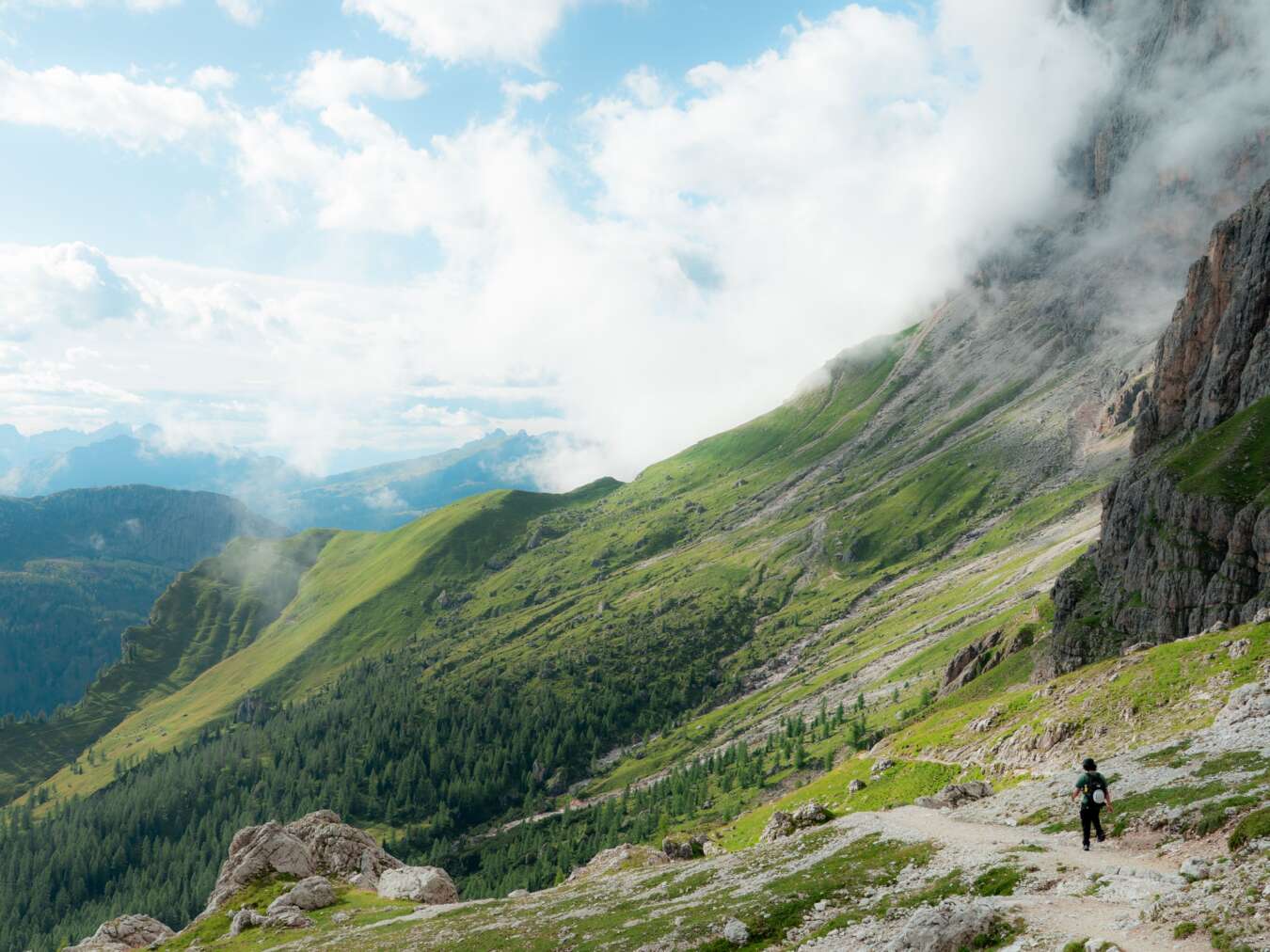
Hiking enthusiasts around the world may have Italy’s Dolomites on their bucket list for their world-famous mountain peaks, picturesque alpine meadows, scenic lakes, and an extensive network of hiking trails. However, planning a trip in the area requires careful thought, especially for first-time visitors.
From the unpredictable weather on mountains to spending nights in remote huts on the peaks, climbers might face unbelievable challenges throughout their journeys. Hence, packing incorrectly can lead to discomfort, several safety concerns, and more.
Therefore, in this listicle, we take a look at five critical packing mistakes for hiking the Dolomites that ruin first-time trips. Here are five packing mistakes travelers must avoid when hiking in the Dolomites.
ALSO READ: 3 extreme glacier expeditions in Iceland you can only tackle with a guide
Five major packing mistakes hikers must avoid in the Dolomites
#5. Overpacking your backpack
Climbing a mountain requires massive strength, and it could take a major toll on hikers’ core, which could become a major roadblock in their trek. Hence, first-time climbers often carry unnecessary clothing and equipment, making long trekking days more exhausting.
According to OnTop Travelers Mountaineering, a bag with 30 to 40 liters is recommended for self-guided Dolomites trekking trips. For the same, travelers should focus on carrying a lightweight backpack, carrying only functional equipment, and carrying a waterproof backpack cover to protect their belongings during rainfall.
#4. Packing the wrong hiking footwear
Travelers must take care to pack appropriate hiking shoes instead of ordinary sneakers; such footwear makes navigating rocky mountain trails uncomfortable and challenging.
According to OnTop Mountaineering, lightweight trekking boots with relatively stiff soles are recommended. Climbers should also pack two or three pairs of quality trekking socks and a blister treatment kit.
#3. Underestimating changing mountain weather
Packing solely for warm weather is another mistake climbers must not make, as weather on the mountain could change throughout the day. Hikers should carry a hooded waterproof jacket, weather-resistant pants, insulating clothing, gloves, and a warm hat. Lightweight wool or synthetic clothing is preferable to cotton.
Moreover, sunscreen, other essential personal protection products, and a good pair of sunglasses are small yet important items to pack.
#2. Mountain hut essentials
For refueling energy, sleeping, cooking food, and eating, hikers need to stay in mountain huts locally known as rifugi, which operate as hotels in these remote mountain areas.
According to Dolomites Guide, many huts provide accommodations such as mattresses, pillows, and blankets.
#1. Leaving behind essential supplies
As mentioned above, travelers must avoid packing extra stuff in their backpack, but also not completely rely on facilities at mountain huts, as it can create major difficulties. Electricity and charging outlets are limited, Wi-Fi is uncommon, and not every mountain hut accepts card payments.
Climbers should carry their own power banks, portable chargers, cash, toilet essentials, and water refills. Other essentials include navigation maps, energy-rich snacks, personal medications, and a first aid kit.
Error: No feed found.
Please go to the Instagram Feed settings page to create a feed.
Error: No feed found.
Please go to the Instagram Feed settings page to create a feed.
Error: No feed found.
Please go to the Instagram Feed settings page to create a feed.