
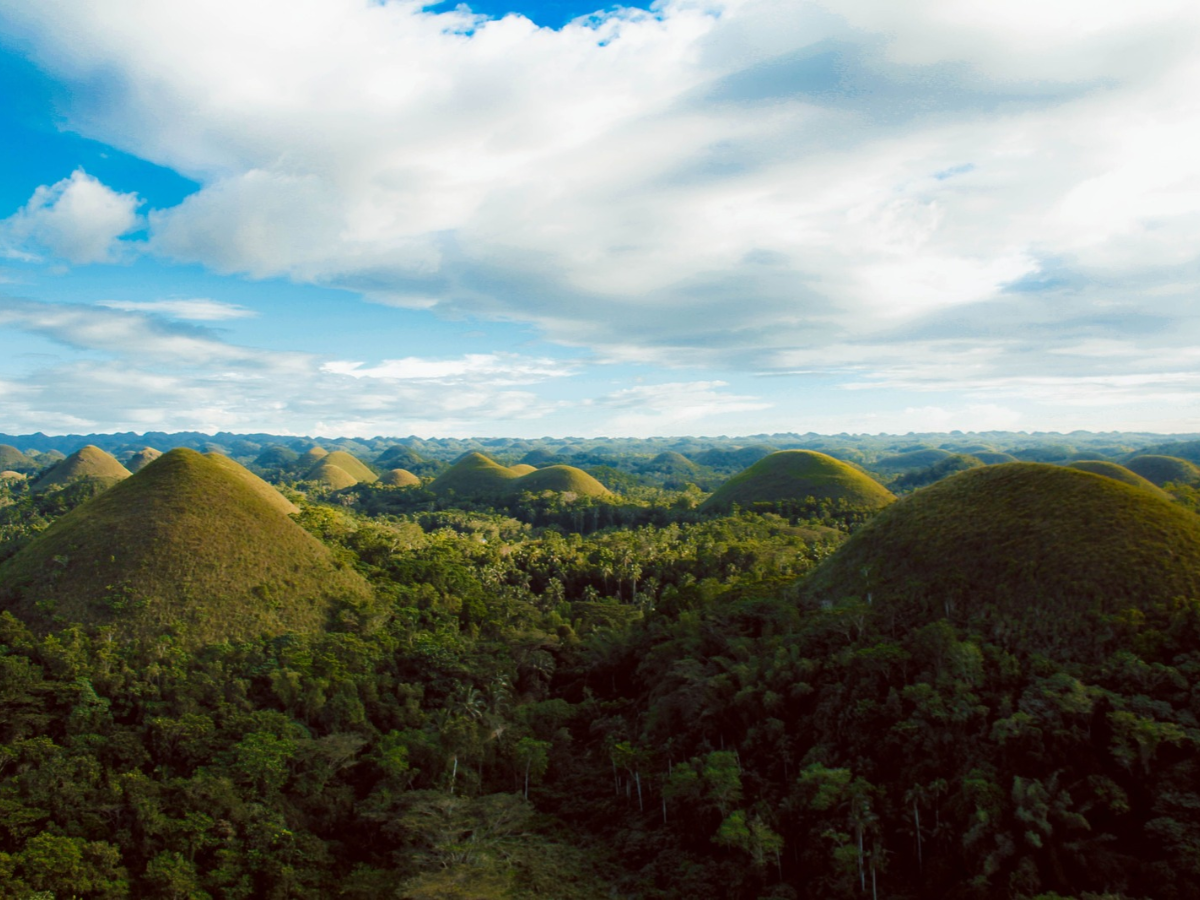
The Bohol Island UNESCO Global Geopark in the Philippines has been unanimously recommended for a Green Card by the UNESCO Global Geoparks Council. With this development, Bohol will be able to retain its status for another four years, after earning its global geopark designation in 2023.
According to the official page of UNESCO, a Global Geopark is a single, unified geographical area where sites and landscapes of international geological significance are managed with a holistic concept of protection, education and sustainable development.
The 2026 recommendation was issued during the Council’s 11th session, held from 2 to 4 November 2026 at UNESCO Headquarters in Paris. This was after Bohol’s First Revalidation Mission, which was conducted from August 3 to August 7, 2026.
Bohol Island has a geological history spanning over 150 million years. It was formed as a result of tectonic activity, which raised the island from the depths of the ocean.
Continue to read for more information.
Details explored as Bohol secures Green Card again
The Bohol Island in the Philippines has secured another four-year extension as the country’s first and only UNESCO Global Geopark after the UNESCO Global Geoparks Council unanimously recommended it for a Green Card.
As per a report in Great Travel Philippines, the Green Card confirms Bohol Island’s compliance with the UNESCO Global Geopark standards. This includes geological heritage conservation, territorial visibility, sustainable development, geoeducation, and geotourism.
According to a report in the Daily Tribune, the translated message by Bohol Governor Erico Aristotle “Aris” C. Aumentado read:
“The Green Card is the result of the unity and hard work of our LGUs, communities, stakeholders, partners, and the entire Bol-anon people—all of whom have played a role in caring for our beloved province.”
He added that securing a green card again adds “greater responsibility” to Bohol, which is to “protect and safeguard” the natural and cultural treasures of the country for future generations.
Additionally, Bohol-Panglao International Airport (BPIA) won the Sustainability Initiative of the Year – Philippines award at the 2026 Travel Daily Media Travel Trade Excellence Awards. The awards were held in Singapore on November 10, 2026.
The airport, operated by Aboitiz InfraCapital Bohol Airport Corporation, was awarded recognition for its seven-part ECO-Airport Project. The project featured solar energy, water preservation, electric ground support, waste reduction, and collaboration with the Bohol Island UNESCO Global Geopark.
Sharing his views on Bohol’s continued recognition as a UNESCO Global Geopark, General Manager Aldwin Uy said:
“[It] reinforces the importance of developing tourism in a way that protects the very assets that make the island unique. At ABAC, we believe that infrastructure development and environmental stewardship must go hand in hand.”
Bohol Island was designated as a UNESCO Global Geopark on 24 May 2023. It covers approximately 8,808 square kilometres of land and surrounding marine areas. Key geological features of this region include the Chocolate Hills, the Danajon Double Barrier Reef, and extensive cave and sinkhole systems.
The Chocolate Hills in Bohol feature conical karst hills, with heights ranging from 30 to 120 meters. They are formed from uplifted Late Pliocene to Early Pleistocene limestone and sculpted by rainwater dissolution. The Danajon Double Barrier Reef consists of two sets of large offshore coral reefs which were formed by tidal currents and coral growth on a submarine ridge in the area.
As noted on UNESCO’s official site, there are 241 UNESCO Global Geoparks located across 51 countries. Asia boasts the highest number of global geoparks of any region. China leads all countries after adding Kanbula and Yunyang in 2025, followed by two more additions – Changshan and Mt. Siguniang – in 2026.
Countries such as Indonesia, Japan, South Korea, Malaysia, Thailand, Vietnam, the Philippines, Iran, North Korea, and Saudi Arabia also host recognized sites, per TimeOut. In April 2026, UNESCO declared 12 new Global Geoparks in 10 nations, including Greece, France, Ireland, Russia, Portugal, Uruguay, and Tunisia.
The Bohol Province is home to over 1.4 million people, per UNESCO. In this region, fishery, agriculture, and aquaculture are the main sources of livelihood, supporting rural households and many coastal communities. Bohol draws travelers with its sandy beaches, coral dive sites, and karst geology across the Bohol Island UNESCO Global Geopark.
Error: No feed found.
Please go to the Instagram Feed settings page to create a feed.
Error: No feed found.
Please go to the Instagram Feed settings page to create a feed.
Error: No feed found.
Please go to the Instagram Feed settings page to create a feed.